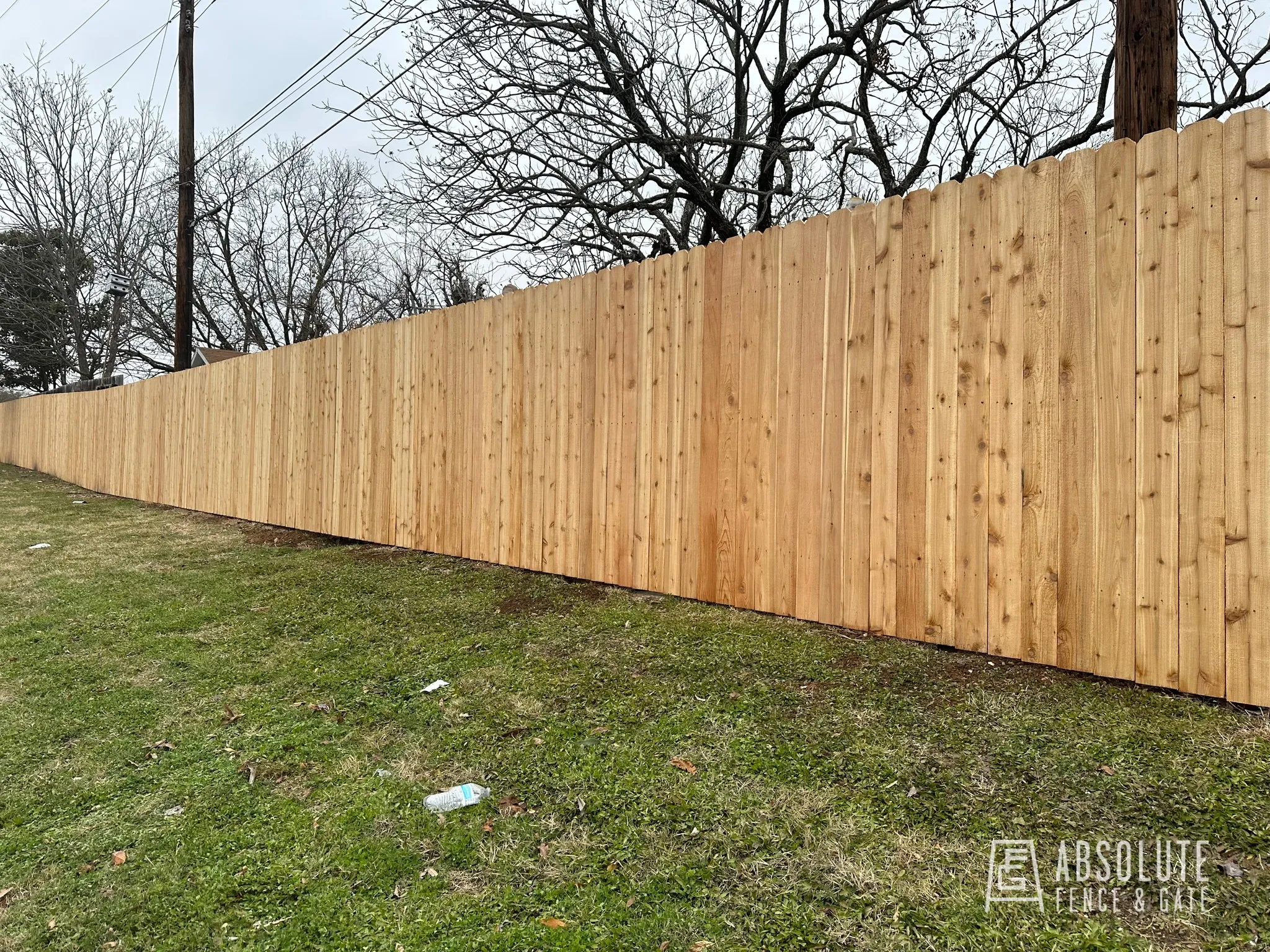
A wood fence in Central Texas lives a hard life. Summer heat pulls moisture out of the boards, storm season drives it back in, and clay soil swells and shrinks around every post in the ground. After eight or ten years of that cycle, most fences start showing wear that patching cannot solve.
Recognizing the right moment for fence replacement in Austin, TX keeps you from spending money twice, once on a short-term fix and again on the new fence you needed all along. Below are the five signs that a wood fence has reached the end of its service life.
1. Posts That Wobble, Lean, or Sink
Posts carry the entire structure, so they tell you more about a fence’s condition than anything else. Grab a post and give it a firm push. Movement at the base, a spongy feel, or a visible lean means the wood below grade has started to break down or the concrete footing has shifted.
One leaning post in an otherwise solid fence is a localized problem. When several posts along the same run move, the pattern points to soil conditions and age working on the whole line at once. Fixing one at a time turns into a rolling project that never quite ends, because the next post is already on its way out.
Failing posts are the point where a full wood fence replacement costs less over five years than chasing individual sections. Soil and drainage vary quite a bit across the metro, and any experienced Austin fence company will set post depth and footings around the conditions on your particular lot.
2. Rot That Runs Deeper Than the Surface
Gray, weathered wood is normal and mostly cosmetic. Rot is different. Press a screwdriver into the wood near the ground line, along the bottom rail, and where boards meet posts. Healthy wood resists. Rotted wood gives way and crumbles.
Watch for these indicators as you walk the fence line:
- Dark, damp patches that stay wet long after rain has passed
- Soft spots that dent under thumb pressure
- Fungal growth or mushrooms sprouting at the base of posts
- Boards that flake or shed splinters when brushed with a gloved hand
- A musty smell along shaded runs of fence
Rot spreads through connected wood. Once it reaches the rails, the fasteners lose their grip and pickets begin to sag even if they look fine on the surface. Widespread rot across multiple sections is one of the clearest cases for starting over with new material.
3. Pickets Warping, Splitting, and Pulling Away
Individual boards cup, twist, and split as they age. A few replacements over the years are ordinary maintenance. The signal to pay attention to is how many boards are moving and how fast.
When a third or more of your pickets have warped away from the rails, opened up gaps, or cracked from end to end, the fence has lost the uniform surface it was built to provide. Nails and screws work loose because the wood no longer holds them. Every windy night sends another board sideways.
Wood species matters here, which is why so many replacement projects in the area move toward cedar fencing options. Cedar holds its shape and resists moisture better than untreated pine, so a fence built with it stays flat and tight for considerably longer.
4. Termites and Other Wood-Destroying Insects
Central Texas has an active termite population, and a wood fence sitting in contact with soil gives them an easy path in. Look for narrow mud tubes running up the posts, small holes with sawdust-like frass beneath them, and hollow-sounding wood when you knock along a rail.
Carpenter ants and wood-boring beetles leave similar signs. What makes insect damage urgent is proximity. A fence line running near your house, deck, or detached garage acts as a bridge, and infested fence posts can lead inspectors straight to a bigger problem on the property.
Insect-damaged wood cannot be restored to structural strength. Once tunneling has hollowed out the interior of posts and rails, removal is the only sound path forward.
5. A Fence That No Longer Does Its Job
Step back and consider why the fence went up in the first place. Most homeowners want privacy, a secure yard for pets and kids, and a clean boundary that adds to the look of the property. A fence that has stopped delivering on those points has stopped earning its place, even if it is technically still standing.
Common signs it has reached that stage:
- Gaps wide enough for a dog to squeeze through or a neighbor to see in
- Sections propped up, wired together, or braced with scrap lumber
- Gates that drag, stick, or no longer latch reliably
- Sagging runs that pull the whole line out of level
- Peeling stain over wood too rough and split to refinish
Curb appeal counts too. If you are thinking about selling, a tired fence is one of the first things buyers notice from the driveway.
How to Decide Whether It Is Time
A quick walk of the property tells you most of what you need to know. Check every post for movement, probe the low areas for rot, count the boards that have warped or split, and note how many sections have already been patched. When problems show up in more than one category on that list, and they appear along multiple runs rather than in one corner, replacement is the practical answer.
Age is the other factor. Untreated pine fences in this climate commonly last eight to twelve years. Cedar often runs longer. A fence past that window with visible post and rot issues is telling you plainly where it stands. From there the decisions are the good ones: picket style, height, gate placement, and stain. A new wood fence installation starts with a measured walk of the property line, so you know the scope and the schedule before any work begins.
Frequently Asked Questions
How long does a wood fence last in Central Texas?
Most untreated pine fences hold up eight to twelve years. Cedar frequently reaches fifteen or more with routine care. Sun exposure, drainage, and how the posts were originally set all affect the number.
Can I replace just the damaged sections of my fence?
Section-by-section work makes sense when damage is isolated, such as a single run hit by a fallen limb. When posts and rot problems appear throughout, the remaining sections are usually close behind, and new material next to badly weathered wood rarely matches in color or height.
How long does a fence replacement take, and do you remove the old fence?
Most residential yards are finished in one to three working days depending on total footage, gate count, and how difficult the digging is. Removal and haul-away of the old fence is available as an add-on, typically a flat $150, and it will be spelled out on your estimate. You are welcome to handle removal yourself if you prefer.
What is the best time of year to replace a fence?
Work happens year-round here. Fall and winter often bring shorter lead times and easier digging conditions than the peak of summer, when hard, dry clay slows post setting.
Plan the Replacement on Your Terms
Fences give plenty of warning before they fail outright. They lean a little, drop a board, open a gap, and then a single storm finishes what a decade of heat and clay soil started. Homeowners who move while the fence is still standing get to set the schedule, choose the wood and the style, and end up with the fence they wanted rather than the one they had to rush into. Absolute Fence and Gate builds wood and cedar fences throughout the Austin area. Give us a call and we will walk your fence line with you.